How Open Bite Affects Your Child’s Speech, Eating, and Smile
Dr. Mark Tavakoli
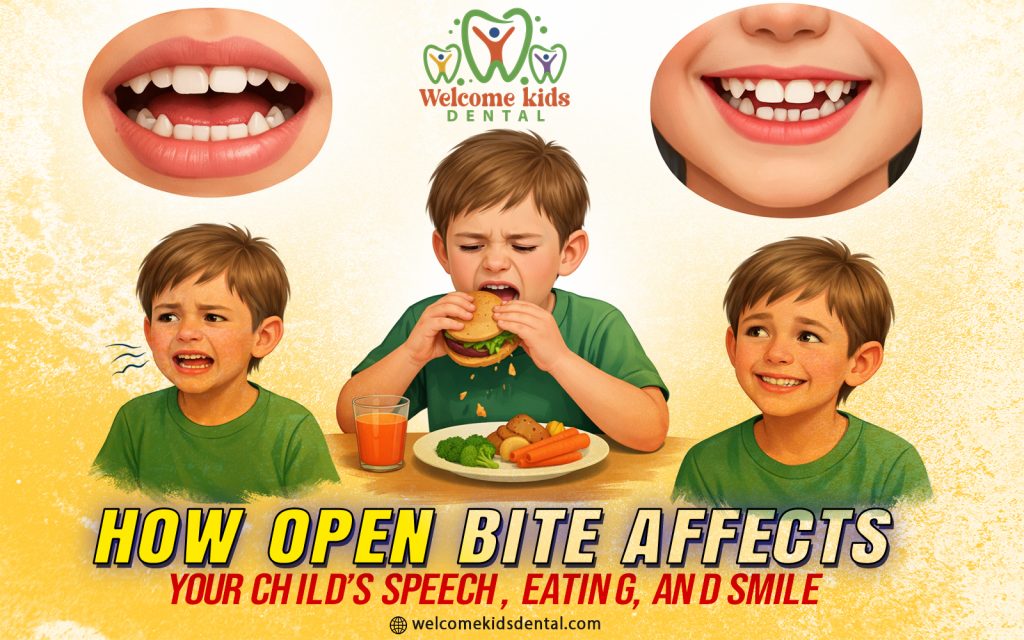
As parents, it’s easy to focus on visible dental issues, crooked teeth, cavities, or discoloration. But some conditions are less obvious at first glance, yet have a much deeper impact on a child’s daily life. One such condition is an open bite. Because it doesn’t always cause immediate pain or discomfort, it can quietly develop over time without drawing attention.
An open bite occurs when the upper and lower teeth don’t meet properly when the mouth is closed. While it may initially seem like a cosmetic concern, it can affect much more than appearance. From speech development to eating habits and even self-confidence, an open bite can influence several aspects of a child’s growth. What starts as a small gap between the teeth can gradually begin to interfere with how a child speaks, chews, and interacts socially.
Another reason this issue often goes unnoticed is that children adapt quickly. They may adjust how they bite food or pronounce words, making the problem less obvious in the early stages. Parents might not recognize these small adjustments as signs of an underlying dental concern.
Because these changes happen gradually, many parents don’t notice the problem until it begins to affect everyday activities. Understanding how an open bite develops and how it impacts your child’s life is the first step toward addressing it early and effectively, before it leads to more complex dental or functional issues.
What Is an Open Bite in Children?
An open bite is a type of dental misalignment where there is a visible gap between the upper and lower teeth when the mouth is closed. This gap most commonly appears in the front teeth, known as an anterior open bite, but it can also occur in other areas of the mouth depending on how the teeth and jaw develop.
In a healthy bite, the upper and lower teeth come together evenly, allowing for proper chewing, speaking, and jaw function. This alignment helps distribute pressure evenly across all teeth and supports normal oral development. When this balance is disrupted, it can interfere with everyday functions like biting into food, forming clear speech sounds, and maintaining proper jaw movement.
There are two main types:
- Anterior open bite – a gap between the front teeth, which often affects speech and biting into foods
- Posterior open bite – a gap between the back teeth, which can make chewing less efficient
Open bite often develops during early childhood and may be influenced by habits such as thumb sucking or tongue thrusting, as well as jaw growth patterns and environmental factors. Because children’s teeth and jaws are still developing, they are more responsive to these influences, which can gradually shift alignment over time.
What makes open bite challenging is that it may not always be immediately noticeable. The gap can be subtle in the beginning and become more pronounced as the child grows. This is why early monitoring through Pediatric preventive dentistry is essential. Regular dental visits allow dentists to track bite development, identify early changes, and guide parents on simple steps to prevent the condition from progressing.
What Causes Open Bite in Kids?
Open bite doesn’t develop randomly, it’s usually the result of specific habits or developmental patterns that influence how a child’s teeth and jaw grow over time. Because children’s mouths are still developing, even small, repeated behaviors can gradually shift alignment and create noticeable gaps.
- Thumb sucking and pacifier use
Prolonged thumb sucking or pacifier use applies continuous pressure on the front teeth and the roof of the mouth. Over time, this pressure can push the upper teeth outward and prevent the lower teeth from meeting them properly. The longer and more frequently the habit continues, especially beyond age 3–4, the greater the impact on bite development. - Tongue thrusting
Some children naturally push their tongue forward when swallowing, speaking, or even at rest. This repeated pressure against the front teeth can gradually move them outward, creating or worsening an open bite. Tongue thrusting can also affect speech patterns, making it an important factor to identify early. - Mouth breathing
Chronic mouth breathing, often caused by nasal congestion or allergies, can change how the jaw and facial muscles develop. When the mouth remains open for long periods, it can alter tongue position and jaw posture, which may contribute to improper bite alignment over time. - Genetics and jaw growth
In some cases, open bite is influenced by inherited traits. The size, shape, and growth pattern of the jaw can be passed down genetically, making certain children more likely to develop alignment issues even without strong external habits. - Prolonged bottle feeding
Extended use of bottles, especially beyond the toddler years, can affect how oral muscles develop and function. The sucking motion associated with bottle feeding can mimic the effects of pacifier use, applying pressure that influences tooth positioning and bite formation.
Understanding these causes helps parents recognize that open bite is often preventable or manageable with early attention. By addressing habits, encouraging proper oral development, and maintaining regular dental visits, families can take proactive steps that support Cavity prevention for children while also promoting healthy alignment and long-term oral health.
How Open Bite Affects Your Child’s Speech
Speech development is closely linked to how the teeth and tongue interact. When there is a gap between the teeth, it can interfere with the way sounds are formed.
Children with an open bite may:
- Develop a lisp or unclear pronunciation
- Struggle with sounds like “s,” “z,” or “th”
- Experience delays in speech clarity
Because the tongue often compensates for the gap, it may push forward during speech, reinforcing the problem over time. Speech difficulties can also affect a child’s confidence. They may become hesitant to speak in social settings or feel self-conscious about how they sound. Early dental evaluation can help identify whether the issue is related to bite alignment, allowing for timely intervention.
How Open Bite Affects Eating and Chewing
An open bite can significantly affect how a child eats. Since the front teeth don’t meet properly, biting into foods becomes difficult.
Children may:
- Struggle to bite into foods like apples or sandwiches
- Rely more on back teeth for chewing
- Avoid certain foods altogether
This can lead to improper chewing patterns, which may affect digestion over time. It can also create uneven pressure on the back teeth, increasing wear and tear.
In some cases, difficulty eating may also lead to frustration or reduced appetite. Regular dental visits, including Children’s dental cleaning in Oakland, help monitor these changes and ensure proper oral function.
How Open Bite Affects Your Child’s Smile and Confidence
One of the most noticeable effects of an open bite is the visible gap between the teeth. While this may seem like a minor cosmetic issue, it can have a significant impact on a child’s self-esteem.
Children may:
- Feel self-conscious about smiling
- Avoid speaking or laughing openly
- Compare their appearance to peers
As children grow older, these concerns can become more pronounced, especially in social and school environments. A healthy smile is closely tied to confidence. Addressing open bite early helps children feel more comfortable and confident as they grow.
When Should Parents Be Concerned About Open Bite?
Open bite is not always an immediate concern in very young children, especially during the early years when teeth and jaws are still developing. Many minor alignment issues can correct themselves as habits change and growth progresses. However, certain signs indicate that the condition may not resolve on its own and should be evaluated by a pediatric dentist.
Parents should consider a dental visit if:
- The gap between teeth persists after age 4–5
By this age, most children begin to outgrow habits like thumb sucking. If the open bite is still present, it may indicate that the alignment issue is becoming more established. - Thumb sucking or similar habits continue
Ongoing habits like thumb sucking, pacifier use, or tongue thrusting can continue to apply pressure on the teeth, preventing natural correction and potentially worsening the bite over time. - Speech or eating difficulties are noticeable
If your child struggles to pronounce certain sounds, has a lisp, or finds it difficult to bite into foods, these could be signs that the open bite is affecting daily functions. - Teeth appear to be shifting out of alignment
Visible changes in how the teeth are positioned, such as protruding front teeth or an increasing gap, should not be ignored, as they may indicate progression of the issue.
It’s also important to watch for subtle signs, such as your child adapting their chewing habits or avoiding certain foods. These small adjustments can signal that the bite is interfering with normal function.
Delaying treatment can lead to more complex issues later, including the need for orthodontic intervention or longer treatment times. Early evaluation allows dentists to identify the cause, guide habit correction, and monitor growth closely.
In many cases, early intervention is simple, non-invasive, and highly effective. Addressing the issue at the right time not only improves dental alignment but also supports proper speech, eating, and overall oral development.
How Pediatric Dentists Diagnose and Treat Open Bite
Pediatric dentists use a combination of visual exams and bite analysis to diagnose open bite. They assess how the teeth come together and evaluate jaw development.
Treatment depends on the severity and cause of the issue. Common approaches include:
- Monitoring growth and development
- Addressing habits like thumb sucking
- Guiding proper oral function
- Recommending early orthodontic care if needed
The goal is to correct the issue in a way that supports natural development while minimizing the need for more complex treatments later.
How Preventive Dental Care Helps Avoid Bite Problems
Preventive care plays a major role in avoiding bite issues like open bite. Regular checkups allow dentists to detect early changes and guide proper development.
Routine visits support:
- Early identification of alignment issues
- Reinforcement of healthy habits
- Monitoring of jaw growth
Preventive care also contributes to Dental anxiety treatment for kids by creating a familiar and comfortable dental experience. By combining home care with professional guidance, parents can help ensure their child’s teeth develop properly.
How Welcome Kids Dental Helps Children with Open Bite Issues
At Welcome Kids Dental, the focus is on early detection, gentle care, and personalized treatment. The team understands that every child’s development is unique, and bite issues like open bite can progress differently from one child to another. That’s why they take a proactive approach, monitoring dental growth over time and identifying even the smallest changes before they become more noticeable.
Rather than waiting for the issue to worsen, the team emphasizes early guidance and prevention. During routine visits, they carefully assess how your child’s teeth and jaws are developing, helping ensure that any signs of open bite are addressed at the right time.
Parents receive clear, practical guidance on:
- Identifying early signs of open bite so they know what to watch for at home
- Managing habits that contribute to the condition, such as thumb sucking or tongue thrusting
- Supporting proper oral development at home through simple, effective daily routines
This partnership between the dental team and parents plays a key role in preventing long-term complications and promoting healthy development.
The practice also creates a welcoming and supportive environment, helping children feel relaxed and safe during their visits. Friendly communication, a calm atmosphere, and a child-first approach make a big difference, especially for kids who may feel nervous about dental care. This is an important part of Dental anxiety treatment for kids, as positive early experiences help build confidence and reduce fear over time.
By focusing on prevention, education, and early intervention, Welcome Kids Dental helps families address open bite issues before they become more complex. The goal is not just to treat the problem, but to guide each child toward healthy growth, proper alignment, and a confident, comfortable smile for the future.
Conclusion
Open bite is more than just a spacing issue, it can affect how your child speaks, eats, and feels about their smile. While it may develop gradually, its impact can become significant if left unaddressed. What may seem like a small gap in the teeth can influence daily activities and even a child’s confidence over time.
The good news is that with early awareness and proper care, open bite can be managed effectively. Recognizing the signs, addressing habits like thumb sucking or tongue thrusting, and maintaining regular dental visits are key steps in protecting your child’s oral health. Early intervention often means simpler, more comfortable solutions and a reduced need for complex treatments later.
It’s also important to remember that children adapt quickly, which can sometimes hide the problem. Regular checkups ensure that even subtle changes are noticed and managed before they progress. With the right support and guidance, children can develop healthy smiles that support their confidence, comfort, and overall well-being for years to come. Taking action early not only improves dental alignment but also helps your child grow up with positive oral habits and a strong, confident smile.