Are Dental Crowns Safe for Kids? A Parent’s Guide
Dr. Mark Tavakoli
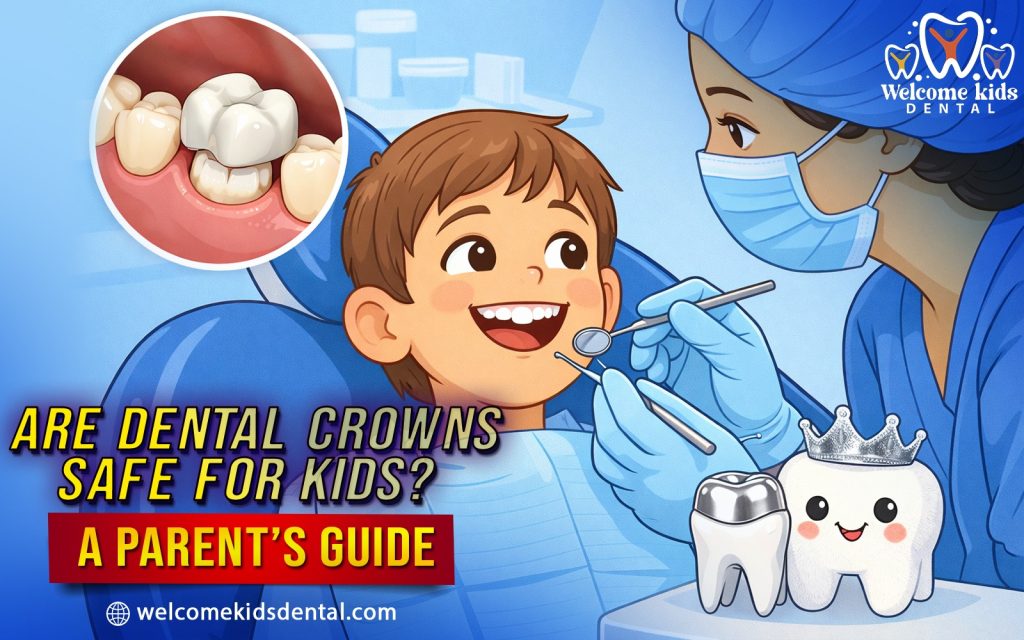
When a pediatric dentist recommends a dental crown for your child, it’s completely normal to feel concerned. Many parents immediately wonder is this safe? Is it really necessary for a baby tooth? Will it hurt? These questions often come up because crowns sound like a more advanced treatment, especially when it involves young children.
These concerns are valid, and they come from a place of wanting the best for your child. The good news is that dental crowns for kids are not only safe but also widely used in pediatric dentistry to protect and restore damaged teeth. In fact, when used appropriately, crowns can prevent bigger dental problems and help children maintain healthy smiles as they grow.
What many parents don’t realize is that delaying treatment can sometimes lead to more discomfort, more complex procedures, or even dental emergencies later. Early intervention with the right treatment like a crown can actually make things much easier for both the child and the parent. Pediatric dentists recommend crowns not to complicate care, but to simplify and strengthen long-term outcomes.
Understanding how crowns work, when they’re needed, and how they’re placed can help ease your concerns and give you confidence in your child’s treatment plan.
What Are Dental Crowns for Kids?
A dental crown is a protective cap that covers a damaged or weakened tooth. Unlike fillings, which repair only a portion of the tooth, a crown covers the entire structure, restoring its strength, shape, and function. Think of it as a shield that protects the tooth from further damage while allowing your child to eat and speak comfortably.
In children, crowns are commonly used for baby teeth that have been significantly affected by decay or injury. While baby teeth are temporary, they play a crucial role in a child’s overall development. They help with proper chewing, support clear speech, and most importantly, hold space for permanent teeth to grow in the correct position. Losing or damaging these teeth too early can lead to alignment issues and other complications later.
Crowns are often recommended when:
- A cavity is too large for a filling
- The tooth structure is weak or breaking down
- The tooth has been damaged due to trauma
- A tooth has undergone extensive treatment and needs added protection
By covering and strengthening the entire tooth, crowns help prevent further decay, fractures, or infections. They also reduce the chances of needing repeated treatments on the same tooth, which can be stressful for children. This approach aligns with Pediatric preventive dentistry, where the focus is on protecting teeth early, preserving natural tooth structure, and avoiding more serious complications in the future.
Are Dental Crowns Safe for Children?
Yes, dental crowns are considered very safe for children. They have been used in pediatric dentistry for decades and are designed specifically for growing teeth. The materials used in crowns such as stainless steel or tooth-colored materials are tested for safety and durability. These crowns are biocompatible, meaning they are safe to use in the mouth and do not cause harm to surrounding tissues.
Dentists also follow strict protocols to ensure safe placement. Before recommending a crown, they carefully evaluate the tooth and determine whether it is the best option for long-term protection. Another important point is that crowns are designed to stay in place until the baby tooth naturally falls out. They do not interfere with the eruption of permanent teeth and are removed naturally along with the baby tooth.
Parents sometimes worry that crowns are too “serious” for children, but in reality, they are a preventive solution. By protecting the tooth early, crowns help avoid infections, pain, and emergency situations that could require more complex care.
Types of Dental Crowns for Kids: Silver vs Tooth-Colored
There are two main types of crowns used in pediatric dentistry:
Silver (Stainless Steel) Crowns
These are the most commonly used crowns for children, especially for back teeth. They are strong, durable, and highly effective at protecting teeth from further decay or damage.
Advantages:
- Extremely durable
- Cost-effective
- Long-lasting
Tooth-Colored Crowns
These crowns are designed to match the natural color of teeth, making them a more aesthetic option, especially for front teeth.
Advantages:
- Natural appearance
- Blends with surrounding teeth
- Ideal for visible areas
The choice between these options depends on the location of the tooth, the extent of damage, and the child’s needs. Pediatric dentists guide parents in selecting the best option for their child.
When Does a Child Need a Dental Crown?
Crowns are recommended when a tooth cannot be effectively restored with a filling alone. This usually happens in cases of advanced decay or structural damage, where the remaining tooth is too weak to support a simple filling. In such situations, a crown provides full coverage and protection, helping preserve the tooth until it naturally falls out.
Common situations include:
- Large cavities that weaken the tooth
When decay affects a significant portion of the tooth, a filling may not be strong enough to hold it together. A crown helps restore strength and prevents further breakdown. - Cracked or broken teeth due to injury
Accidents, falls, or sports injuries can damage a child’s tooth. In these cases, parents may visit a Broken tooth kids dentis Oakland, where a crown is often recommended to protect and restore the tooth. - Repeated decay in the same tooth
If a tooth has already been treated with fillings multiple times, it may become weaker over time. A crown offers a more durable, long-term solution. - Teeth that have undergone certain treatments
After more extensive dental procedures, the tooth may need additional support. A crown helps reinforce it and ensures it can function normally. - Severely worn or weakened teeth
In some cases, habits like grinding or ongoing decay can weaken a tooth significantly, making a crown the best option for protection.
Early treatment is key. Addressing the problem at the right time helps prevent pain, infection, and further damage. It also reduces the chances of more complex procedures later, making dental care easier and more comfortable for your child.
What Happens During the Crown Procedure?
The crown procedure for children is straightforward and carefully designed to be as comfortable and stress-free as possible. Pediatric dentists use gentle techniques and a child-friendly approach to ensure that the experience feels safe and manageable for young patients.
The process typically includes:
- Removing the decayed portion of the tooth
The dentist carefully removes any damaged or decayed areas to ensure the tooth is clean and healthy before placing the crown. - Shaping the tooth to fit the crown
The tooth is gently shaped so the crown can fit securely over it. This step ensures the crown will sit properly and function like a natural tooth. - Placing and securing the crown over the tooth
The crown is placed over the prepared tooth and bonded securely, restoring its strength, shape, and function.
In many cases, pediatric crowns can be placed in a single visit, which is especially helpful for children. The dentist carefully checks the fit to make sure the crown feels comfortable and does not interfere with the child’s bite. Before starting the procedure, the dentist may use numbing techniques to ensure the child does not feel discomfort. Throughout the appointment, the dental team explains each step in a simple and reassuring way, helping the child feel more relaxed and in control.
The procedure is performed gently, with a strong focus on comfort and reassurance. Pediatric dentists are specially trained to work with children, using calm communication and patience to make the experience smooth and positive. This approach helps children feel more confident about dental care and reduces fear during future visits.
Are Dental Crowns Painful or Scary for Kids?
This is one of the most common concerns parents have. The truth is, modern pediatric dentistry focuses heavily on comfort and minimizing fear. Most children tolerate crown procedures very well. Dentists use gentle techniques and explain each step in a child-friendly way. In some cases, numbing or relaxation options may be used to ensure the child feels comfortable.
Creating a positive experience is especially important for Dental anxiety treatment for kids. When children feel safe during dental visits, they are more likely to develop a healthy attitude toward dental care.
Benefits of Dental Crowns for Children
Dental crowns offer several important benefits, especially when a tooth needs more support than a filling can provide. They are designed to protect, restore, and maintain your child’s oral health in a way that supports both immediate comfort and long-term development.
- Protect weakened teeth from further damage
Crowns act as a strong outer shield, covering the entire tooth and preventing it from breaking or wearing down further. This is especially important for teeth that have already been weakened by decay or injury. - Prevent decay from spreading
By sealing off the tooth, crowns stop bacteria from reaching vulnerable areas. This helps prevent existing decay from worsening and protects the tooth from future damage. - Restore chewing function
A damaged tooth can make it difficult for a child to chew properly. Crowns restore the tooth’s shape and strength, allowing children to eat comfortably without pain or sensitivity. - Maintain space for permanent teeth
Baby teeth play a crucial role in guiding permanent teeth into the correct position. Crowns help preserve these teeth until they naturally fall out, preventing alignment issues later. - Reduce the need for future treatments
Because crowns provide full coverage and long-term protection, they minimize the chances of needing repeated dental procedures on the same tooth. - Improve overall comfort and confidence
When a damaged tooth is properly restored, children are less likely to experience discomfort, which helps them feel more confident while eating, speaking, and smiling.
By covering the entire tooth, crowns provide a level of protection that fillings cannot. This makes them especially valuable for preserving baby teeth until they naturally fall out. They also support Cavity prevention for children by stopping decay from progressing and protecting vulnerable areas, helping ensure your child’s smile stays healthy and strong.
How Long Do Crowns Last in Kids?
Pediatric crowns are designed to last until the baby tooth naturally falls out. In most cases, they remain in place for several years without any issues. They are strong enough to handle everyday activities like eating and chewing. With proper oral hygiene and regular dental visits, crowns can function effectively throughout their lifespan. Routine visits, including Children’s dental cleaning in Oakland, help ensure that the crown and surrounding teeth remain healthy.
How Welcome Kids Dental Ensures Safe and Comfortable Crown Treatment
When it comes to your child’s dental care, choosing the right practice makes all the difference. Welcome Kids Dental focuses on providing safe, gentle, and effective treatments tailored to children. The team prioritizes a child-first approach, ensuring that every visit feels comfortable and supportive.
From the moment you walk in, the environment is designed to help children feel relaxed. Preventive care is a major focus. By identifying issues early and recommending solutions like crowns when needed, the practice helps avoid more serious problems in the future.
Parents also benefit from clear communication. Every treatment is explained in detail, so you understand why a crown is recommended and how it will help your child. For children who feel nervous, the practice provides a calm and reassuring experience. This plays a key role in Dental anxiety treatment for kids, helping children build confidence over time. With a strong focus on safety, comfort, and long-term oral health, Welcome Kids Dental provides families with trusted care they can rely on.
Conclusion
Dental crowns for kids are not something to fear, they are a safe, effective solution for protecting and restoring damaged teeth. When recommended by a pediatric dentist, they play an important role in maintaining your child’s oral health. By addressing dental issues early and choosing the right treatment, you can help your child avoid pain, prevent complications, and maintain a healthy smile. Crowns provide long-term protection and support proper dental development.
If you have concerns about your child’s teeth or have been told they may need a crown, don’t hesitate to seek guidance. With the right care and support, you can ensure your child’s dental experience is positive, comfortable, and beneficial for years to come.