What Is Tongue Tie in Children? Understanding This Common Oral Condition
Dr. Mark Tavakoli
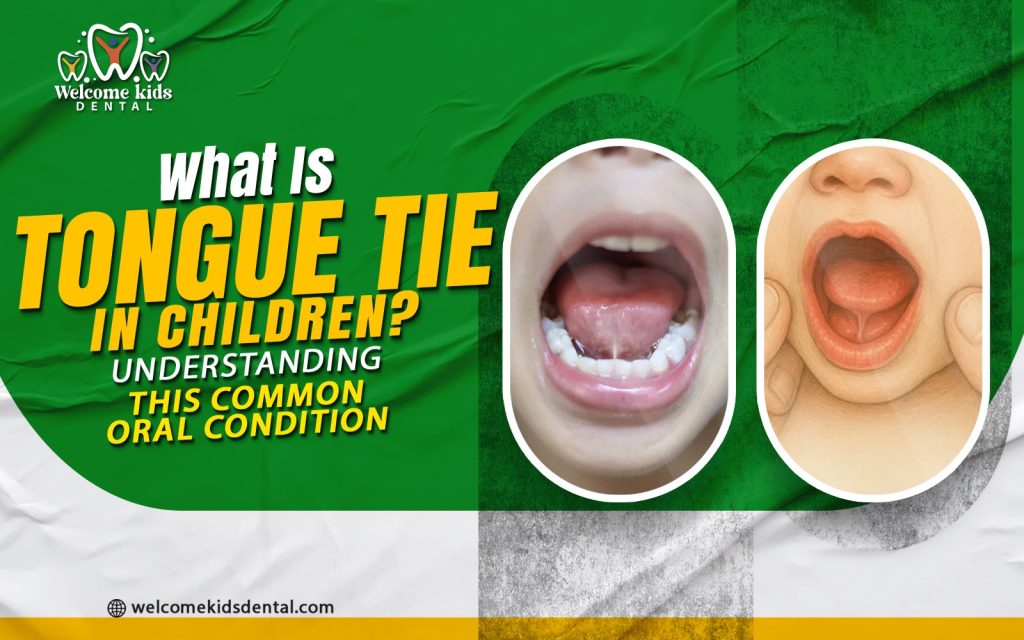
Parents may notice that their child has difficulty moving their tongue, struggles with certain oral movements, or has trouble with feeding or speech. Sometimes, these concerns may be related to a condition called tongue tie.
Tongue tie, medically known as ankyloglossia, occurs when the band of tissue connecting the underside of the tongue to the floor of the mouth, called the lingual frenulum, is unusually short, tight, or restrictive. This can limit how freely the tongue moves. Tongue tie can be present from birth, but its effects can vary significantly from one child to another. Some children have a restricted lingual frenulum but experience no noticeable problems, while others may have difficulties with feeding, oral function, speech sounds, or maintaining proper tongue movement.
Regular Pediatric preventive dentistry visits can help monitor a child’s oral development and give parents an opportunity to discuss concerns about tongue movement, oral habits, speech-related issues, or changes in dental development.
Understanding what tongue tie is, how it can affect children, and when professional evaluation may be appropriate can help parents make informed decisions about their child’s oral health.
What Is Tongue Tie in Children?
Tongue tie is a condition in which the lingual frenulum restricts the normal movement of the tongue. The lingual frenulum is a small fold of tissue underneath the tongue. Everyone has one, but its length, thickness, flexibility, and attachment point can vary naturally.
In a child with tongue tie, this tissue may attach close to the tip of the tongue or may be unusually tight or short. As a result, the tongue may not be able to move freely in certain directions.
A child with tongue tie may have difficulty:
- Lifting the tongue toward the roof of the mouth
- Moving the tongue from side to side
- Sticking the tongue out fully
- Moving food around the mouth
- Maintaining certain tongue positions
- Performing some oral movements
The appearance of the frenulum alone does not determine whether treatment is necessary. Some children have a prominent or tight-looking frenulum but have normal tongue function. For this reason, healthcare professionals generally consider both the physical appearance of the tissue and how the tongue functions.
What Causes Tongue Tie?
Tongue tie, medically known as ankyloglossia, is generally present from birth. It develops when the lingual frenulum, the band of tissue underneath the tongue, forms in a way that restricts normal tongue movement. The exact reason this happens is not always clear, but several factors may be associated with the condition.
- Differences in early development:
During normal development before birth, the tissues under the tongue change as the mouth forms. In children with tongue tie, the lingual frenulum may remain thicker, shorter, tighter, or attached closer to the front of the tongue than usual. This can create varying degrees of restriction. - Genetic factors:
Family history may play a role in tongue tie. Some children with the condition have relatives who have also experienced a restricted lingual frenulum. This suggests that certain developmental characteristics may sometimes run in families. - Variation in frenulum structure:
Not all tongue ties look the same. The frenulum may be thin and stretchy in one child but thicker and less flexible in another. Its attachment point can also differ. These structural differences influence how much movement is possible. - Different degrees of restriction:
Tongue tie exists on a spectrum. A mild restriction may have little or no effect on everyday activities, while a more restrictive frenulum may make it difficult for a child to lift, extend, or move the tongue from side to side. - Attachment location:
Where the frenulum attaches can affect tongue mobility. If the tissue attaches very close to the tip of the tongue, it may become more noticeable when the child sticks the tongue out or tries to lift it toward the roof of the mouth. - Tissue flexibility:
The flexibility of the frenulum also matters. Two children may have frenula that look similar but experience very different levels of movement because one tissue is more flexible than the other. - Tongue movement and function:
The appearance of the frenulum does not tell the entire story. What matters is whether the child can use the tongue effectively for age-appropriate activities. A child may have a visibly prominent frenulum but still have normal tongue function. - It is not caused by poor oral hygiene:
Parents should know that tongue tie is not caused by inadequate brushing, dental hygiene, or something a child ate. Improving oral hygiene cannot make a restrictive frenulum disappear. - It is not caused by parenting:
Nothing a parent did during early childhood causes tongue tie. Parents should not blame themselves if their child is diagnosed with the condition. - It can be noticed at different ages:
Although tongue tie is present from birth, it may not become noticeable immediately. Some cases are identified during infancy because of feeding concerns, while others become apparent later when a child has difficulty with specific tongue movements or oral activities. - A visible frenulum does not automatically require treatment:
Every child has a lingual frenulum, and seeing a tight or prominent band of tissue does not necessarily mean there is a problem. Treatment decisions should be based on function rather than appearance alone. - Professional assessment is important:
A pediatric dentist can examine the tongue, frenulum, teeth, gums, and overall oral development to determine whether movement is actually restricted. If concerns involve feeding, swallowing, or speech, other qualified professionals may also contribute to the evaluation.
Ultimately, the important question is not simply “Does my child have a tongue tie?” but “Is the tongue restriction affecting my child’s function or development?” A thorough evaluation can help parents understand the significance of the finding and whether monitoring, additional assessment, or treatment is appropriate.
What Signs of Tongue Tie Should Parents Look For?
The signs of tongue tie can differ depending on the child’s age and the degree of restriction.
In infants, parents may notice feeding difficulties. An infant may have trouble maintaining a latch, make clicking sounds while feeding, take a long time to feed, or appear to tire during feeding. Breastfeeding difficulties can have many possible causes, so these symptoms do not automatically mean tongue tie is present. As children grow, the signs may become more related to tongue movement and oral function.
Parents may notice that a child:
- Cannot stick their tongue out very far
- Has difficulty lifting the tongue
- Cannot move the tongue easily from side to side
- Has a heart-shaped or notched tongue tip when sticking it out
- Struggles to clear food from certain areas of the mouth
- Has difficulty performing specific tongue movements
- Finds certain oral activities challenging
Older children may also complain that their tongue feels tight or restricted.
Speech concerns can sometimes lead parents to wonder about tongue tie. However, speech development is complex, and difficulty producing a particular sound does not automatically mean that a child has a tongue tie. A speech-language pathologist or other appropriate professional may need to evaluate speech concerns separately.
Can Tongue Tie Affect Speech, Eating, or Dental Development?
Tongue tie can affect oral function in some children, but the impact varies considerably.
Speech
Parents often ask whether tongue tie causes speech problems. A restricted tongue can make certain tongue movements more difficult, but not every child with tongue tie develops a speech disorder.
Speech development involves many factors, including coordination, hearing, oral motor skills, and overall language development. If a child has persistent difficulty producing particular sounds, a speech-language evaluation may be helpful. A dentist may work alongside other professionals when a child’s concerns involve both oral structure and function.
Eating and swallowing
The tongue plays an important role in moving food around the mouth and helping prepare food for swallowing. A significant restriction may make certain tongue movements more difficult. Some children may have trouble moving food from one side of the mouth to another or clearing food from around the teeth.
However, occasional difficulty eating certain foods does not automatically indicate tongue tie. Children’s eating patterns can change for many reasons.
Dental development
The tongue interacts with the teeth, gums, palate, and other structures in the mouth. A restricted tongue may affect certain oral movements and resting positions. However, the relationship between tongue tie and dental problems is not simple. A child with tongue tie does not necessarily develop crooked teeth, cavities, or bite problems.
Regular dental examinations are therefore important for monitoring the child’s overall oral development rather than assuming that every dental concern is caused by tongue restriction.
Good oral hygiene remains important regardless of whether a child has tongue tie. Routine Children’s dental cleaning in Oakland can help keep the teeth and gums healthy while the dental team monitors developing oral structures and discusses any concerns parents may have.
How Is Tongue Tie Diagnosed and Treated in Children?
Tongue tie is diagnosed through a clinical evaluation of the child’s tongue movement and the lingual frenulum. A dentist or other healthcare professional may ask parents about symptoms and observe how the child moves their tongue. Depending on the child’s age, they may assess movements such as lifting the tongue, sticking it out, moving it from side to side, or performing specific oral tasks.
The assessment may also consider whether the restriction is actually causing a functional problem. Treatment is not automatically required. If a child has a tongue tie but has normal feeding, speech, oral function, and dental development, a healthcare professional may recommend observation rather than intervention.
When the restriction is causing significant functional difficulties, treatment options may be discussed.
One possible procedure is a frenotomy, which involves releasing the restrictive frenulum. A frenectomy involves removing or releasing more of the frenulum tissue. The specific procedure and technique depend on the child’s individual situation and the professional performing the treatment. Some children may also benefit from exercises or therapy designed to improve tongue movement and oral function, depending on the concerns being addressed.
Because tongue tie can involve feeding, speech, oral motor function, and dental development, treatment may sometimes involve more than one healthcare professional. Parents should be cautious about assuming that releasing a tongue tie will automatically resolve unrelated problems. The decision to treat should be based on the child’s symptoms, functional limitations, clinical findings, and overall needs.
How Welcome Kids Dental Helps Children With Tongue Tie
At Welcome Kids Dental, children’s oral care includes monitoring how the mouth develops as children grow. When parents notice restricted tongue movement or have concerns about their child’s oral function, they can discuss those concerns during a dental appointment. The dental team can examine the child’s mouth, teeth, tongue, and surrounding structures and determine whether the concern appears to require closer evaluation.
A tongue tie assessment can be particularly useful when parents notice that a child has difficulty moving the tongue, maintaining good oral hygiene around certain areas, or performing specific oral movements.
Welcome Kids Dental also recognizes that children may feel nervous about unfamiliar examinations or dental procedures. A calm, child-friendly approach can help make appointments more comfortable and encourage children to become more confident with dental care.
If a child’s concerns extend beyond routine dental care, the dental team can help parents understand whether another professional, such as a speech-language pathologist or appropriate medical specialist, may need to be involved. The goal is not simply to identify a tongue tie. It is to understand whether the restricted tissue is affecting the child’s function and whether any further evaluation or treatment is appropriate.
Conclusion
Tongue tie, or ankyloglossia, is a condition in which the tissue beneath the tongue restricts its normal movement. It is generally present from birth and can range from mild to more restrictive forms. Some children with tongue tie have no noticeable problems and may not require treatment. Others may experience difficulties with feeding, tongue movement, oral function, or certain speech-related movements.
Parents may notice signs such as limited tongue movement, difficulty lifting or extending the tongue, a notched or heart-shaped tongue tip, or challenges with certain oral activities. However, these signs alone cannot determine whether treatment is necessary. A professional evaluation can help determine whether the lingual frenulum is actually restricting function. If the child is functioning normally, monitoring may be appropriate. If significant functional problems are present, treatment options can be considered based on the child’s individual needs.
At Welcome Kids Dental, the focus is on supporting healthy oral development while helping parents understand changes they notice in their child’s mouth. If you suspect your child may have a tongue tie, discussing your concerns during a dental visit can be a useful first step toward understanding whether the condition is affecting your child’s oral health or development.