What Is a Dental Midline Shift in Children? Understanding This Common Alignment Issue
Dr. Mark Tavakoli
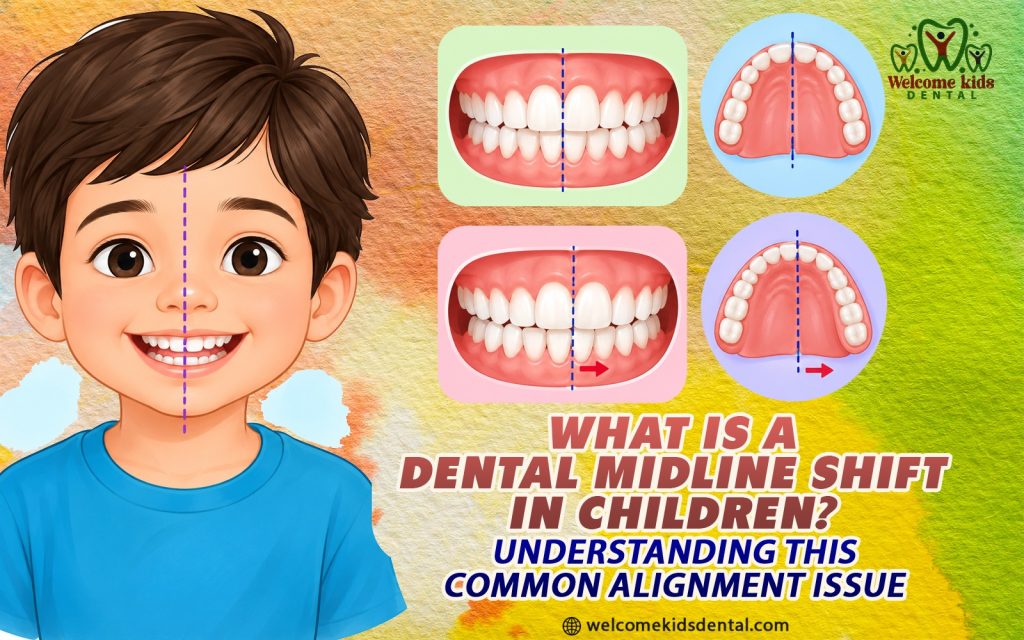
A child’s smile can change significantly as baby teeth fall out and permanent teeth begin to come in. During this stage, parents may notice that the center line between the upper front teeth does not line up with the center line between the lower front teeth. This is known as a dental midline shift.
A small difference in the position of the dental midlines is relatively common in children and does not always indicate a serious problem. However, a noticeable or developing shift can sometimes be associated with crowding, early tooth loss, differences in jaw position, or changes in how the upper and lower teeth fit together.
Because children’s teeth and jaws are still developing, understanding why a midline shift occurs can help parents recognize when it may simply be part of normal development and when it deserves professional evaluation.
So, what exactly is a dental midline shift, what causes it, and how can it affect a child’s developing smile and bite?
What Is a Dental Midline Shift in Children?
A dental midline refers to the imaginary vertical line that runs between the two upper front teeth or between the two lower front teeth. Ideally, the upper and lower dental midlines line up with each other and are reasonably centered within the face. However, they do not always match perfectly.
A dental midline shift occurs when the center line of the upper teeth and the center line of the lower teeth do not align.
For example, when looking directly at your child’s smile, you may notice that:
- The upper front teeth appear centered, but the lower front teeth are shifted to one side.
- The upper dental midline appears slightly to the left or right of the lower dental midline.
- The front teeth appear to lean or move toward one side.
- One side of the dental arch appears more crowded than the other.
- The teeth do not appear evenly positioned around the center of the face.
A midline shift can occur in the upper teeth, lower teeth, or both. The amount of movement can range from very subtle to more noticeable.
It is also important to distinguish a dental midline shift from a shift caused by the position of the jaw. Sometimes the teeth are positioned asymmetrically even though the jaws themselves are developing normally. In other cases, the lower jaw may move slightly to one side when the child bites, making the dental midline appear shifted.
This distinction matters because the underlying cause can influence whether the issue needs monitoring or treatment.
What Causes a Dental Midline Shift in Kids?
A dental midline shift can develop for several reasons. In some children, it is related to the natural position of the teeth. In others, it may be connected to changes that occur as baby teeth are lost and permanent teeth erupt.
Crowded Teeth
Crowding is one of the factors that can contribute to a midline shift. When there is not enough room for permanent teeth, individual teeth may move, rotate, or overlap as they attempt to fit into the dental arch. This movement can cause one side of the front teeth to shift toward the center. A child may therefore have both dental crowding and a noticeable midline discrepancy.
Early Loss of a Baby Tooth
Baby teeth help maintain space for permanent teeth. When a baby tooth is lost earlier than expected, nearby teeth may begin moving into the open space. This can reduce the room available for the developing permanent tooth and may cause the teeth on one side of the dental arch to shift. Over time, this movement can contribute to an uneven dental midline.
Retained Baby Teeth
The opposite situation can also create a problem. Sometimes a baby tooth remains in place longer than expected while the permanent tooth is developing underneath or nearby.
If the permanent tooth cannot follow its normal eruption path, it may emerge at an unusual angle or position. This can affect the alignment of the neighboring teeth and potentially contribute to a midline shift.
Missing Permanent Teeth
A congenitally missing permanent tooth can affect the balance of the dental arch. When a permanent tooth is absent, the surrounding teeth may move into the available space. Depending on which tooth is missing and where it is located, this movement can cause one side of the dental arch to become more crowded or shifted.
Extra Teeth
An extra tooth can interfere with normal eruption and spacing. If it develops close to the front teeth, it may prevent a permanent tooth from erupting normally or push neighboring teeth out of their expected positions.
Dental imaging can help identify an extra tooth when it cannot be seen during a routine visual examination.
Uneven Tooth Eruption
Permanent teeth do not always erupt at exactly the same time on both sides of the mouth. A temporary difference in eruption can make a child’s smile appear asymmetrical. As more teeth emerge, the alignment may change.
This is one reason parents should not assume that every temporary midline difference requires immediate orthodontic treatment.
Jaw Position and Bite
Sometimes a midline shift is related to the way the upper and lower jaws come together. For example, if a child’s lower jaw naturally shifts slightly to one side when biting because of an interference between the teeth, the lower dental midline may appear displaced.
This is sometimes referred to as a functional shift because the position changes when the child closes the mouth. Identifying whether a midline shift is primarily dental or related to jaw position is an important part of evaluating a child’s bite.
What Signs of a Dental Midline Shift Should Parents Watch For?
A midline shift can be subtle, particularly when a child is in the middle of losing baby teeth and developing permanent teeth. Parents may notice it while brushing their child’s teeth, looking at photographs, or simply watching the smile develop.
Some signs worth paying attention to include:
The upper and lower front teeth do not line up:
When your child bites down naturally, the center between the upper front teeth may appear different from the center between the lower front teeth.
The front teeth appear shifted to one side:
The upper or lower front teeth may seem noticeably closer to one side of the face.
One side looks more crowded:
There may be more overlapping or twisting of teeth on one side of the dental arch.
A permanent tooth erupts in an unusual position:
A tooth that comes in behind, in front of, or at an angle to neighboring teeth can affect the surrounding alignment.
A baby tooth is lost early:
Premature tooth loss can sometimes lead to movement of nearby teeth and changes in alignment.
The child’s bite looks different on one side:
Parents may notice that the teeth do not meet evenly when the child closes their mouth.
The lower jaw appears to move to one side when biting:
If the lower jaw shifts noticeably when your child closes their mouth, it is worth mentioning to the dentist.
Parents should remember that children’s smiles can look uneven temporarily during tooth eruption. A midline that is slightly off does not automatically mean that something is wrong. The more important question is whether the difference is stable, increasing, associated with crowding or bite changes, or caused by an underlying dental issue.
How Is a Dental Midline Shift Diagnosed and Treated?
A dental midline shift is usually identified during a dental examination.
The dentist will look at the child’s teeth while the mouth is open and closed and evaluate how the upper and lower teeth relate to each other.
The examination may include:
- Checking the upper and lower dental midlines
- Evaluating crowding and spacing
- Looking for retained or missing teeth
- Assessing how permanent teeth are erupting
- Examining the child’s bite
- Checking whether the lower jaw shifts during closure
- Reviewing the child’s dental history
- Using dental X-rays when additional information is needed
X-rays may be particularly useful when the dentist suspects that an unerupted, missing, extra, or unusually positioned tooth is contributing to the midline shift.
Treatment depends on the cause, severity, and stage of dental development.
Monitoring
Some children simply need observation. If the midline difference is small and the teeth are continuing to erupt normally, the dentist may monitor the child during routine appointments. This is especially appropriate when the child is still losing baby teeth and the final position of the permanent teeth has not yet been established.
Addressing Baby Teeth
If early loss or prolonged retention of a baby tooth is contributing to the shift, the dentist may recommend an appropriate approach to manage the situation. In some cases, maintaining space may be important. In others, the dentist may determine that a retained baby tooth should be addressed.
Managing Crowding
When insufficient space contributes to the midline shift, treatment may focus on managing the available space and guiding the developing teeth. The appropriate approach depends on the child’s age, dental development, amount of crowding, and overall bite.
Orthodontic Treatment
Some children may eventually benefit from orthodontic treatment to improve tooth alignment and correct the bite. Not every child with a dental midline shift needs braces. Treatment decisions should be based on the complete dental picture rather than the position of the midline alone.
How Welcome Kids Dental Helps Monitor Dental Alignment in Children
Welcome Kids Dental focuses on monitoring children’s oral development as their smiles change from baby teeth to permanent teeth.
A dental midline shift is easier to understand when it is considered alongside the child’s overall dental development. During routine visits, the dental team can monitor tooth eruption, spacing, crowding, bite relationships, and changes in the position of the front teeth.
Parents can mention concerns such as:
- “My child’s front teeth do not seem centered.”
- “The lower teeth look shifted to one side.”
- “One side of the mouth looks more crowded.”
- “A permanent tooth came in behind the baby tooth.”
- “My child’s bite seems to move when they close their mouth.”
These observations can help the dental team determine whether the change appears to be part of normal development or whether it deserves closer evaluation.
This type of monitoring is an important part of Pediatric preventive dentistry because preventive care is not limited to checking for cavities. Regular dental examinations also provide opportunities to observe how the teeth and jaws are developing.
For parents seeking Children’s dental cleaning in Oakland, routine cleaning appointments can also provide an opportunity to discuss changes in their child’s developing smile. Maintaining clean, healthy teeth while permanent teeth are erupting supports good oral health while the dentist continues to monitor alignment.
Welcome Kids Dental can help parents understand whether a small alignment difference simply needs observation or whether a developing issue may benefit from further evaluation. The goal is not to treat every difference in alignment. Instead, the focus is on identifying concerns at an appropriate stage and helping each child maintain healthy dental development.
Conclusion
A dental midline shift in children occurs when the center lines of the upper and lower teeth do not align. Small differences can be normal, particularly while baby teeth are being replaced by permanent teeth. However, a noticeable or developing shift can sometimes be associated with crowding, early or delayed loss of baby teeth, missing or extra teeth, unusual tooth eruption, or changes in the way the bite comes together.
Parents may notice that the front teeth appear off-center, one side looks more crowded, or the lower jaw seems to move to one side when their child bites. These signs do not necessarily indicate a serious problem, but they are worth discussing with a pediatric dentist.
Regular dental visits give the dental team an opportunity to track these changes over time and determine whether they are part of normal development or require additional attention.
At Welcome Kids Dental, monitoring tooth eruption, spacing, alignment, and bite development can help parents understand changes in their child’s smile and make informed decisions about care. With appropriate monitoring and timely evaluation when needed, children can receive support as their permanent teeth and bite continue to develop.