Narrow Palate in Children: What Parents Should Know
Dr. Mark Tavakoli
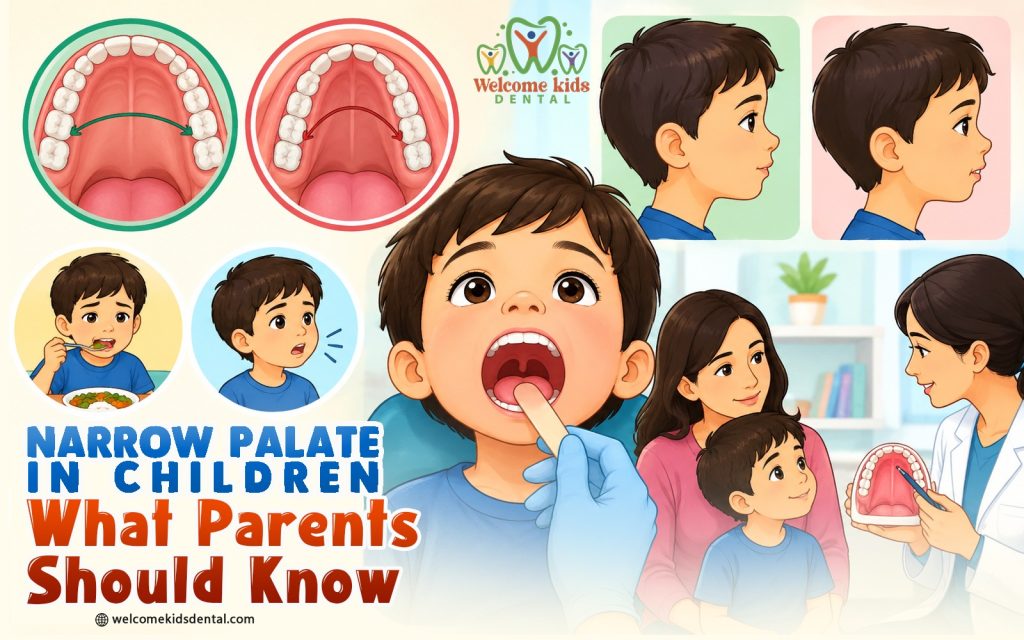
Parents may sometimes notice that their child has crowded teeth, difficulty biting certain foods, or a smile that seems unusually narrow. While these concerns can have several causes, one possible factor is the shape and width of the upper jaw. A narrow palate can affect how a child’s teeth fit together and, in some cases, influence the development of the bite.
The palate is the roof of the mouth. The upper jaw and palate develop as a child grows, and their shape provides the foundation for the upper teeth. When the upper dental arch is narrower than expected, there may be less room for teeth to erupt and align properly.
A narrow palate does not automatically mean that a child needs treatment. Some children have naturally narrower dental arches without significant problems. However, identifying potential concerns early can help dentists monitor changes and determine whether intervention may be appropriate.
Regular Pediatric preventive dentistry appointments give dental professionals an opportunity to evaluate tooth eruption, bite development, jaw growth, and other changes as a child’s smile develops.
What Is a Narrow Palate in Children?
A narrow palate refers to an upper jaw or upper dental arch that is narrower than expected for the child’s stage of growth.
The palate forms the roof of the mouth and is closely connected to the upper jaw. Ideally, the upper teeth should develop within a balanced arch that allows them to meet the lower teeth properly when the child bites.
When the upper arch is too narrow, the upper teeth may not have enough room to align normally. This can sometimes contribute to crowding or changes in the way the upper and lower teeth fit together.
A narrow palate may be associated with:
- Crowded upper teeth
- Teeth erupting out of their normal positions
- A crossbite
- Difficulty keeping certain areas clean
- An uneven or narrow-looking dental arch
- Changes in chewing or biting
The appearance of the palate alone is not enough to determine whether it is too narrow. Dentists evaluate the child’s teeth, bite, jaw growth, and overall oral development before deciding whether there is a concern.
What Causes a Narrow Palate?
A narrow palate can develop for several reasons, and there is not always one clear cause.
Genetics and jaw development
Genetics can influence the size and shape of a child’s jaw and dental arches. Children may naturally inherit narrower facial or dental structures from their parents. Growth patterns also differ from one child to another. A child’s upper jaw may develop differently from the lower jaw, which can affect the way the teeth eventually fit together.
Prolonged oral habits
Certain oral habits may influence the developing dental arches when they continue for an extended period. Thumb sucking, finger sucking, or other habits that place pressure on the teeth and palate can affect tooth position and bite development in some children. The effect depends on the habit, its intensity, frequency, and how long it continues.
Tongue position and function
The tongue naturally rests against the roof of the mouth and plays a role in oral function. An unusual tongue posture or swallowing pattern may affect the forces acting on the teeth and developing dental arches. This does not mean that every child with an unusual tongue posture will develop a narrow palate, but it can be one factor considered during an evaluation.
Nasal breathing difficulties
Children who regularly have difficulty breathing through their nose may develop mouth-breathing habits. Chronic mouth breathing can be associated with changes in oral posture and facial development, although it is not considered the sole cause of a narrow palate.
If a child frequently breathes through their mouth, snores, or has persistent nasal congestion, parents should discuss these symptoms with the child’s healthcare provider.
Crowding and tooth development
A narrow upper dental arch may leave less room for permanent teeth as they erupt. Conversely, existing crowding can also make the upper arch appear narrow. Dentists therefore consider the relationship between jaw width, tooth size, tooth position, and bite rather than treating any one feature in isolation.
What Signs of a Narrow Palate Should Parents Watch For?
A narrow palate may not cause obvious symptoms, especially when a child is young. Some signs become more noticeable as permanent teeth begin to erupt.
Parents may notice:
- Crowded or overlapping upper teeth
- A high or narrow-looking roof of the mouth
- Upper teeth positioned inward
- A crossbite
- Difficulty biting or chewing certain foods
- Teeth erupting outside the normal dental arch
- Difficulty cleaning between crowded teeth
- A noticeable difference between the upper and lower dental arches
A crossbite can be an especially important sign. In a normal bite, the upper teeth generally sit slightly outside the lower teeth. With a crossbite, one or more upper teeth may sit inside the lower teeth when the child bites down.
Not every crossbite is caused by a narrow palate, but a narrow upper arch can contribute to this type of bite problem. Parents may also notice that their child’s front teeth look crowded as permanent teeth emerge. Again, crowding has many possible causes, so an examination is needed to determine whether the width of the upper jaw is contributing to the problem.
Can a Narrow Palate Affect a Child’s Teeth and Bite?
Yes. A narrow palate can affect the available space and relationship between the upper and lower teeth.
When the upper dental arch is narrow, permanent teeth may have less room to erupt. This can contribute to overlapping, rotated, or displaced teeth. In some children, the upper teeth may erupt toward the inside of the mouth rather than occupying their expected positions. A narrow upper arch can also contribute to a posterior crossbite. This occurs when some of the upper back teeth bite inside the corresponding lower teeth instead of outside them.
If a crossbite causes the child to shift their jaw to one side when biting, it may create an uneven bite pattern. A dentist may want to monitor this because the child’s jaw and teeth are still developing. A narrow palate can also make certain areas of the mouth more difficult to clean. When teeth overlap or sit very close together, toothbrush bristles and floss may have more difficulty reaching between them. This can allow plaque to remain around crowded areas.
That does not mean a narrow palate directly causes cavities. However, difficult-to-clean tooth positions can make daily oral hygiene more challenging.
This is why monitoring dental development is important. The goal is not simply to make the dental arch look wider. It is to determine whether the child’s jaw and teeth are developing in a way that supports healthy function, comfortable chewing, and a stable bite.
How Is a Narrow Palate Diagnosed and Treated?
A dentist can usually identify potential concerns by examining the child’s mouth, teeth, and bite. They may look at the width of the upper dental arch, the position of the teeth, how the upper and lower teeth meet, and whether the child shifts the jaw while biting.
Dental X-rays may be recommended when the dentist needs additional information about developing permanent teeth or the underlying jaw structures.
Treatment is not automatically necessary. If the child’s bite is functioning well and the teeth are developing normally, the dentist may simply monitor growth over time.
When treatment is appropriate, an orthodontic evaluation may be recommended. Depending on the child’s age and individual needs, an orthodontist may consider an appliance designed to gradually widen the upper dental arch. This is often referred to as palatal expansion. The purpose of expansion is not simply cosmetic. In appropriate cases, it can help create additional space, improve the relationship between the upper and lower arches, and correct certain types of crossbite.
Treatment timing varies. A child’s stage of growth, tooth development, severity of the problem, and overall bite all influence the recommended approach. Parents should not attempt to determine whether a child needs palatal expansion based solely on the appearance of the roof of the mouth. A professional evaluation is necessary to understand whether the palate is actually contributing to a dental or bite problem.
Maintaining healthy teeth is also important before, during, and after orthodontic treatment. Regular Children’s dental cleaning in Oakland visits can help monitor oral health and make it easier to identify areas where plaque is accumulating around crowded or changing teeth.
How Welcome Kids Dental Helps Children With Narrow Palate and Bite Concerns
At Welcome Kids Dental, monitoring a child’s developing smile involves looking beyond individual teeth. The dental team evaluates tooth eruption, spacing, bite development, and other changes that can affect how a child’s mouth develops over time.
If a parent notices crowded teeth, a crossbite, unusual tooth positioning, or concerns about the shape of the upper jaw, these concerns can be discussed during a routine visit. The dental team can determine whether the child’s development appears within a healthy range or whether additional evaluation may be helpful.
Early monitoring can be particularly valuable because children’s teeth and jaws are still changing as they grow. Identifying a developing bite concern does not necessarily mean immediate treatment is needed. Sometimes, observation is the most appropriate approach.
Welcome Kids Dental also aims to make dental visits comfortable for children. A positive experience can help children feel more relaxed during examinations and follow-up visits, especially if additional dental care or imaging is recommended.
Parents can also use routine appointments to ask questions about oral habits, tooth crowding, bite changes, and permanent tooth eruption. Understanding what is happening as a child’s smile develops can make it easier to recognize when something deserves closer attention.
Conclusion
A narrow palate in children refers to a relatively narrow upper jaw or dental arch. While some children naturally have narrower arches without developing problems, a significantly narrow upper arch can sometimes contribute to crowding, crossbite, unusual tooth positioning, or difficulty maintaining certain areas of the mouth.
Parents may notice signs such as crowded upper teeth, a crossbite, teeth erupting outside the normal arch, or an unusually narrow-looking roof of the mouth. However, these signs do not confirm a narrow palate on their own. A pediatric dentist can evaluate the child’s teeth, bite, and jaw development and determine whether monitoring, imaging, or an orthodontic evaluation is appropriate. If treatment is needed, options such as palatal expansion may be considered depending on the child’s individual development.
The most important step is not to assume that every narrow-looking palate requires treatment. Instead, regular dental visits allow professionals to track growth and identify concerns at the appropriate time.
At Welcome Kids Dental, children receive ongoing care focused on healthy tooth development, comfortable dental experiences, and early identification of developing oral health and bite concerns. If you are unsure whether your child’s palate, teeth, or bite are developing normally, bringing up your concerns during a dental visit can provide the clarity and reassurance you need.